
Explore our boiler blog for expert insights, industry updates, and valuable tips on boiler maintenance, efficiency, and more.

Explore our boiler blog for expert insights, industry updates, and valuable tips on boiler maintenance, efficiency, and more.
Choosing the right industrial boiler system for your factory is one of the most critical decisions you can make for long-term operational efficiency, cost savings, and environmental compliance. The core factors to consider include steam capacity requirements, fuel type, industry-specific demands, energy efficiency, and total lifecycle cost. In this guide, you will learn how to evaluate these elements, compare boiler types, and select the most suitable system for your facility. By the end, you’ll have a clear roadmap for choosing an industrial boiler that balances performance, sustainability, and cost-effectiveness.
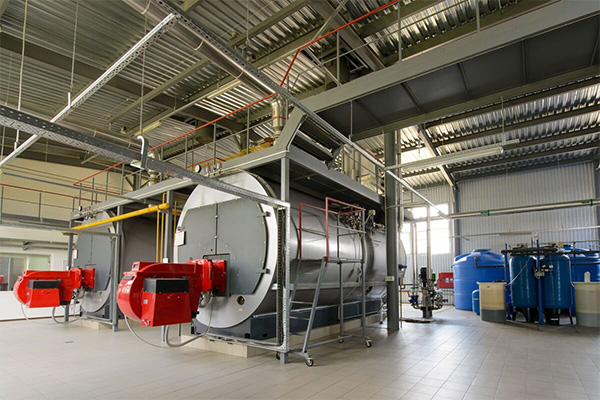
An industrial boiler system is a mechanical unit designed to generate steam or hot water for various industrial applications. Unlike residential boilers, industrial systems are built to handle higher capacities, pressures, and continuous operation demands.
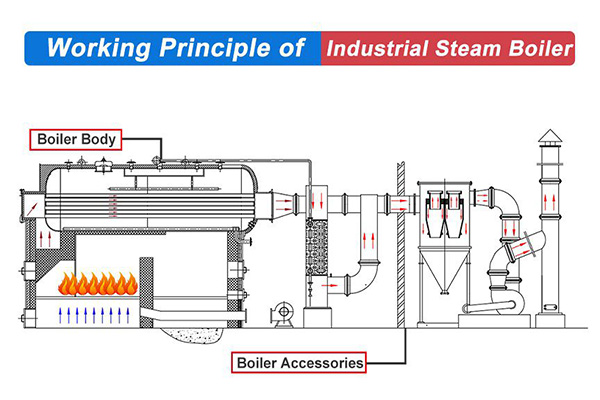
Industrial boilers operate by heating water to produce steam or hot water, which is then distributed through pipes to various parts of a facility. The system may use gas, oil, coal, biomass, or electricity as fuel. Efficient operation requires proper sizing, fuel selection, and maintenance.
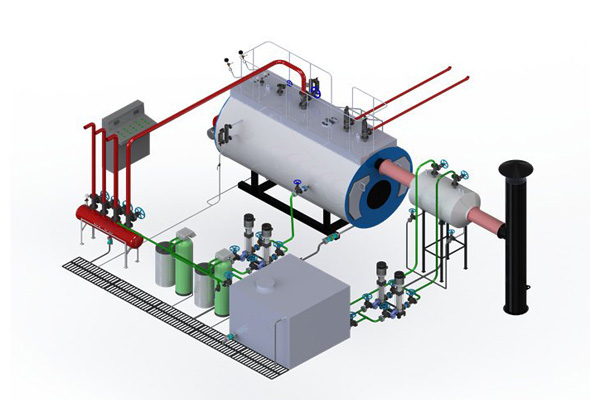
The boiler’s capacity should match your facility’s steam or hot water demand:
Typical sizing is expressed in kilograms per hour (kg/h) or tons per hour (t/h).
Your choice of fuel impacts operational cost, emissions, and availability. Common options include:
Efficiency directly affects fuel consumption and operating cost. Consider:
Check physical footprint and accessibility. Evaluate modular or compact boiler options for tight spaces.
Consider:
Note: The cheapest upfront option is not always the most cost-effective in the long run.
| Boiler Type | Best For | Advantages | Disadvantages |
|---|---|---|---|
| Fire Tube | Small factories | Low upfront cost, simple design | Lower capacity, slower response |
| Water Tube | Large industries | High efficiency, high pressure | Higher initial cost, complex maintenance |
| Biomass | Eco-focused projects | Low fuel cost, renewable | Requires storage space, more maintenance |
| Electric | Small scale, indoor use | Clean, low noise | High electricity cost, limited capacity |
Equipment cost varies by type and capacity. Installation costs include piping, controls, and site preparation.
Fuel cost is the largest ongoing expense. Energy efficiency significantly impacts long-term expenses.
Includes routine inspections, water treatment, burner servicing, and spare parts. Preventive maintenance prolongs lifespan and reduces downtime.
Recommended: Gas or steam boilers with sanitary design. Focus: Consistent, clean steam for cooking and sterilization.
Recommended: High-efficiency steam boilers. Focus: Continuous heat for dyeing and fabric finishing.
Recommended: High-pressure water tube boilers. Focus: Steam at precise temperature and pressure for reactions.
Recommended: Custom system tailored to production needs. Focus: Flexibility and scalability.
Choosing the right industrial boiler system requires careful consideration of steam capacity, fuel type, industry demands, efficiency, and total lifecycle cost. The best decision balances performance, cost, and environmental compliance. By analyzing your specific needs and understanding different boiler types, you can select a system that maximizes efficiency and ensures long-term reliability.
A: Calculate your steam demand in kg/h or tons/h and match it to the boiler capacity. Oversizing wastes energy, undersizing reduces production efficiency.
A: Natural gas is generally the most cost-effective and clean, but biomass may be cheaper in regions with abundant renewable resources.
A: Most industrial boilers have a lifespan of 10–20 years with proper maintenance and efficient operation.

We have more than 20 years of experience in boiler system equipment research and development and manufacturing. And committed to designing and producing boilers that suit your needs, including fire-tube, water-tube, and steam boilers, while also staying up-to-date with the latest technological boiler.
Get in touch
Copyright © Zhengzhou Dabonn Energy Co., Ltd


