
Explore our boiler blog for expert insights, industry updates, and valuable tips on boiler maintenance, efficiency, and more.

Explore our boiler blog for expert insights, industry updates, and valuable tips on boiler maintenance, efficiency, and more.
A Circulating Fluidized Bed Boiler (CFB Boiler) is an advanced industrial boiler that burns fuel in a circulating bed of solid particles suspended by high-speed airflow. It uses continuous circulation of fuel, ash, and bed materials inside the furnace to achieve high combustion efficiency, flexible fuel utilization, and lower emissions.
Unlike traditional boilers (gas boiler, electric boiler, oil fired boiler) , a circulating fluidized bed boiler can efficiently burn a wide range of fuels, including coal, biomass, agricultural waste, wood chips, and other low-quality fuels, making it a popular solution for power plants and industrial steam generation.
A circulating fluidized bed boiler works based on the principle of fluidized bed combustion technology. The main process includes fuel feeding, fluidization, combustion, particle circulation, and heat transfer.
The fuel is continuously fed into the combustion chamber through a specially designed feeding system.
Common fuels used in CFB boilers include:
The fuel particles mix with bed materials such as sand and ash inside the furnace.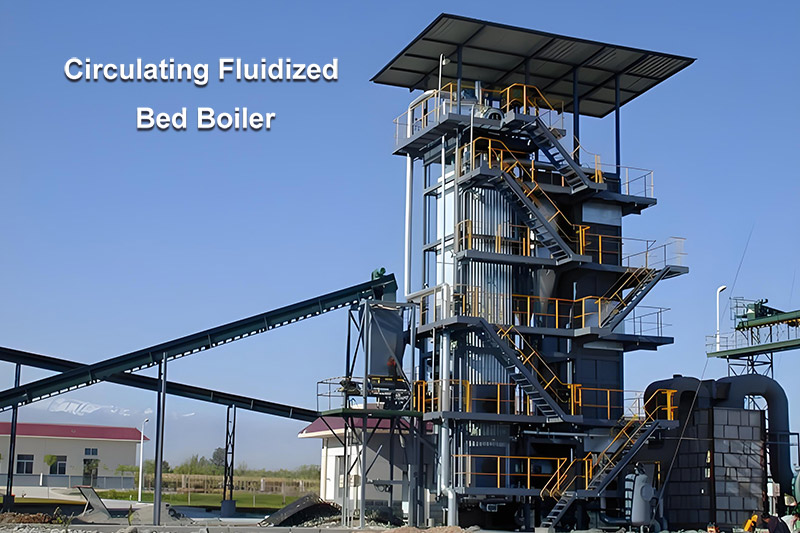
Primary air is introduced from the bottom of the furnace through an air distribution system.
When the airflow reaches a certain velocity, solid particles become suspended and behave like a fluid. This creates a highly turbulent combustion environment where fuel particles, air, and bed materials are thoroughly mixed.
This fluidized condition provides:
Inside the furnace, fuel burns at a relatively low temperature, normally around 800–900°C.
Compared with conventional combustion systems, the lower combustion temperature helps reduce nitrogen oxide (NOx) formation.
During combustion:
The combustion gas carries some unburned particles and ash out of the furnace.
A cyclone separator captures these particles and returns them back into the combustion chamber.
This continuous circulation process increases fuel residence time and allows more complete combustion.
The result is:
One of the biggest advantages of a CFB boiler is its ability to burn different types of fuels.
Traditional boilers usually require specific fuel quality, while circulating fluidized bed boilers can handle fuels with:
This makes CFB technology especially suitable for biomass energy projects and industries looking to reduce fuel costs.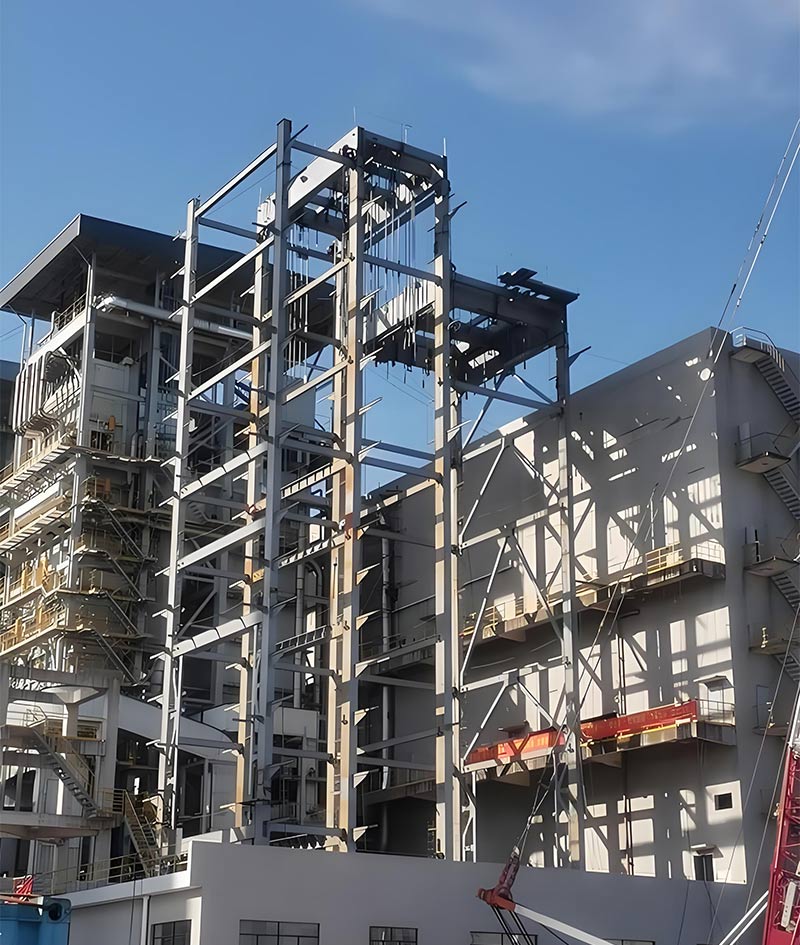
The continuous circulation of fuel particles improves combustion performance.
Because unburned particles return to the furnace multiple times, the boiler can achieve higher fuel utilization compared with many traditional combustion systems.
Key benefits include:
Environmental performance is one of the major reasons industries choose circulating fluidized bed boilers.
The lower furnace temperature reduces thermal NOx generation, while limestone can be added during combustion to capture sulfur dioxide (SO₂).
A CFB boiler can provide:
A circulating fluidized bed boiler is widely used in renewable energy projects because it can burn various biomass fuels.
Examples include:
This allows industries to convert waste materials into useful energy.
CFB boilers provide stable combustion because of their uniform temperature distribution and strong mixing characteristics.
They can operate efficiently under different load conditions, making them suitable for continuous industrial production.
Large-scale circulating fluidized bed boilers are widely used in electricity generation.
They are especially suitable for regions where low-cost coal or biomass fuels are available.
CFB technology is commonly applied in biomass energy projects.
It allows power plants to use agricultural waste and renewable fuels while reducing dependence on fossil fuels.
Chemical production requires a stable steam supply for heating and processing.
CFB boilers provide reliable thermal energy for:
Textile factories consume large amounts of steam for:
A circulating fluidized bed boiler can provide continuous and efficient steam production.
Paper mills generate large amounts of biomass waste.
A CFB boiler can use these by-products as fuel while producing steam for manufacturing processes.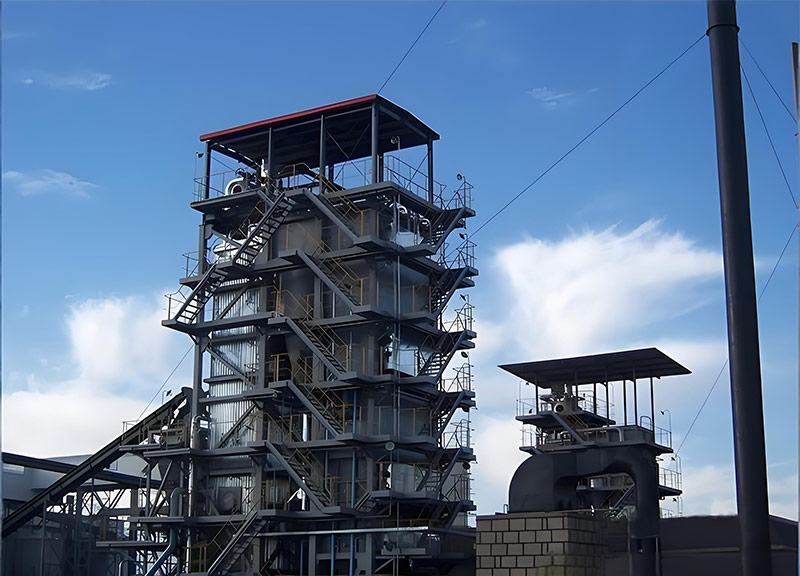
| Feature | Circulating Fluidized Bed Boiler | Traditional Boiler |
|---|---|---|
| Fuel flexibility | Excellent | Limited |
| Combustion efficiency | High | Medium |
| Emission control | Better | More difficult |
| Fuel requirement | Low-quality fuel possible | Requires stable fuel quality |
| Combustion temperature | 800–900°C | Higher temperature |
| Biomass application | Excellent | Limited |
For industries using different fuel sources or requiring strict emission control, CFB boilers provide significant advantages.
A circulating fluidized bed boiler can burn many types of fuels, including:
The ability to use multiple fuels makes CFB boilers highly adaptable for modern energy systems.
The cost of a circulating fluidized bed boiler depends on several factors:
Larger boilers require:
Different fuels require different designs.
Higher steam pressure and temperature require stronger materials and more advanced technology, increasing the total project cost.
A complete CFB boiler system usually includes:
Yes. A circulating fluidized bed boiler is one of the most suitable industrial boilers for biomass fuels because it can handle different moisture levels and fuel sizes.
The combustion efficiency of a CFB boiler is typically above 95%, depending on fuel type, boiler design, and operating conditions.
The main difference is particle circulation.
CFB boilers are generally used for larger capacities and higher efficiency requirements.
CFB boilers operate at lower combustion temperatures and provide better fuel mixing, which helps reduce NOx emissions and improves fuel utilization.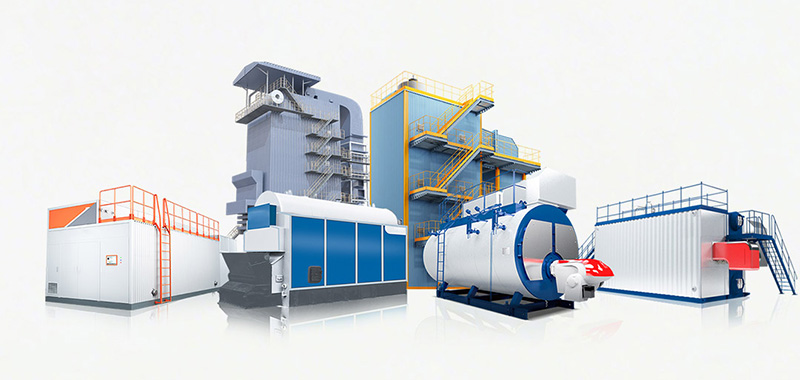
Dabonn Energy is a professional industrial boiler manufacturer specializing in the design, manufacturing, and supply of advanced energy solutions for global industries. With extensive experience in boiler technology, Dabonn Energy provides reliable and efficient boiler systems, including circulating fluidized bed boilers, biomass boilers, gas fired boilers, oil fired boilers, steam boilers, and hot water boilers.
As an experienced CFB boiler manufacturer, Dabonn Energy focuses on delivering high-efficiency combustion solutions for power plants, biomass energy projects, manufacturing facilities, and industrial steam applications. The company's circulating fluidized bed boiler technology is designed to provide excellent fuel flexibility, stable operation, high combustion efficiency, and reduced emissions.
Dabonn Energy's CFB boiler solutions can utilize various fuels, including coal, biomass pellets, rice husk, wood chips, agricultural waste, and other alternative fuels. By combining advanced combustion technology with customized engineering design, Dabonn Energy helps customers improve energy efficiency, reduce operating costs, and achieve more sustainable industrial production.
From boiler design and manufacturing to installation support and after-sales service, Dabonn Energy provides complete energy system solutions tailored to different industrial requirements. The company is committed to helping global customers build reliable, environmentally friendly, and cost-effective boiler systems.
A Circulating Fluidized Bed Boiler is an efficient and flexible industrial boiler technology designed for modern energy requirements. Its ability to burn various fuels, achieve high combustion efficiency, and reduce emissions makes it suitable for power generation, biomass energy, and industrial steam production.
For industries seeking a reliable boiler solution with fuel flexibility and environmental advantages, a CFB boiler is one of the most advanced combustion technologies available today.

We have more than 20 years of experience in boiler system equipment research and development and manufacturing. And committed to designing and producing boilers that suit your needs, including fire-tube, water-tube, and steam boilers, while also staying up-to-date with the latest technological boiler.
Get in touch
Copyright © Zhengzhou Dabonn Energy Co., Ltd


