
Explore our boiler blog for expert insights, industry updates, and valuable tips on boiler maintenance, efficiency, and more.

Explore our boiler blog for expert insights, industry updates, and valuable tips on boiler maintenance, efficiency, and more.
In many boiler projects, the first question is surprisingly simple. Before discussing brands, control systems, or installation details, buyers usually want to know one thing:
How much fuel does a 4 ton steam boiler consume per hour?
The answer affects daily operating cost, fuel selection, and long-term investment planning. It also plays a role when estimating emissions and evaluating whether a boiler upgrade actually makes financial sense.
Below is a practical comparison based on commonly used industrial data, focusing on oil-fired, gas-fired, and biomass-fired boilers with a capacity of 4 tons of steam per hour.
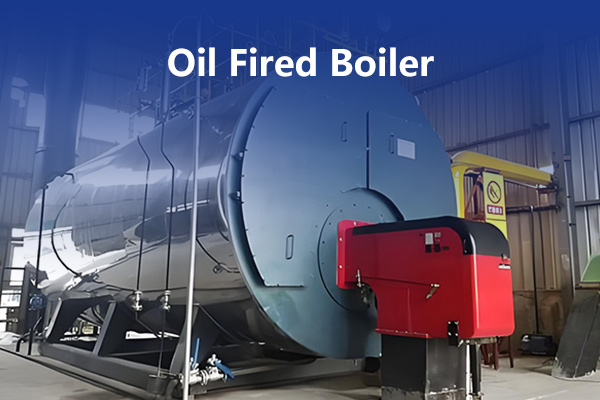
In simple terms, a 4 ton steam boiler means the unit can produce about 4,000 kg of steam every hour, often referred to as 4 TPH (tons per hour).
This size is widely seen in real production environments, including:
For many factories, this capacity sits right in the middle — large enough for continuous production, but still manageable in terms of space and fuel supply.
| Parameter | Value |
|---|---|
| Steam output | 4,000 kg/h |
| Steam pressure | 1.0–1.25 MPa |
| Steam type | Saturated steam |
| Feedwater temperature | 20–60°C |
| Boiler efficiency | 85–90% (fuel-dependent) |
In real operation, results rarely match calculation values exactly. Installation quality, control logic, insulation condition, and even operator habits can all influence actual fuel consumption.

Producing saturated steam typically requires around 2,700–2,800 kJ per kilogram. Engineers usually work with an average value instead of the extreme ends of the range.
For a 4 TPH boiler, the total heat demand comes out to roughly:
4,000 kg × 2,750 kJ ≈ 11,000,000 kJ per hour (11 GJ/h)
This number is the reference point used in the fuel calculations below.
| Fuel Type | Typical Consumption per Hour | Boiler Efficiency |
|---|---|---|
| Diesel oil | 260–290 kg | 88–90% |
| Heavy fuel oil | 240–270 kg | 87–89% |
| Natural gas | 300–330 Nm³ | 90–92% |
| LPG | 210–240 kg | 89–91% |
| Biomass pellets | 800–950 kg | 80–85% |
| Wood chips | 1,000–1,200 kg | 75–82% |
Diesel oil has a heating value of about 42,000 kJ/kg, while heavy fuel oil is slightly lower, at around 40,000 kJ/kg.
For a 4 ton steam boiler running on diesel, hourly fuel consumption usually falls between 260 and 290 kg. Heavy oil consumption is often slightly lower, depending on burner setup and combustion tuning.
Oil-fired boilers are often chosen in locations without reliable gas supply or where fast startup is required. Fuel cost and emissions, however, are factors that most buyers carefully evaluate before making a decision.

Natural gas boilers are known for clean combustion and precise load control. The lower heating value of natural gas typically ranges from 35,000 to 38,000 kJ per Nm³.
Under normal factory conditions, a 4 ton steam boiler usually consumes 300–330 Nm³ of natural gas per hour. The exact figure depends not only on efficiency, but also on how often the boiler operates at partial load instead of full capacity.
For plants with stable gas access, natural gas boilers often offer a good balance between operating cost, automation level, and environmental performance.
Common biomass fuels include pellets, wood chips, rice husk, and palm shell. Biomass pellets generally have a heating value of 15,000–17,000 kJ/kg, while wood chips are lower and less consistent.
In most projects, a 4 ton biomass steam boiler consumes roughly:
Biomass systems are frequently selected in regions with abundant agricultural waste, where fuel cost is low and carbon reduction policies provide additional incentives.
Even when boilers share the same rated capacity, fuel usage can differ noticeably. Common influencing factors include boiler age, steam pressure, feedwater temperature, and load fluctuation during daily operation.
It is not uncommon to see fuel consumption increase by 10–15% in systems with poor maintenance or unstable operating conditions.
In practice, the final choice usually depends on local conditions rather than theoretical efficiency alone. Fuel availability, price stability, and emission limits all play a role.
| Priority | Fuel Option |
|---|---|
| Lowest operating cost | Biomass |
| Cleanest combustion | Natural gas |
| Simple installation | Diesel |
| Carbon reduction targets | Biomass |
| High automation level | Natural gas |

For a 4 ton steam boiler, hourly fuel consumption is typically around:
For most buyers, these figures serve mainly as a starting reference. Actual decisions are usually made after checking local fuel prices, operating hours, and real steam demand on site.
If you have questions about choosing the right boiler or want a detailed fuel consumption estimate for your factory, feel free to reach out to us directly.
Our team is ready to provide personalized advice and help you select the most cost-effective and efficient solution for your steam system.

We have more than 20 years of experience in boiler system equipment research and development and manufacturing. And committed to designing and producing boilers that suit your needs, including fire-tube, water-tube, and steam boilers, while also staying up-to-date with the latest technological boiler.
Get in touch
Copyright © Zhengzhou Dabonn Energy Co., Ltd


